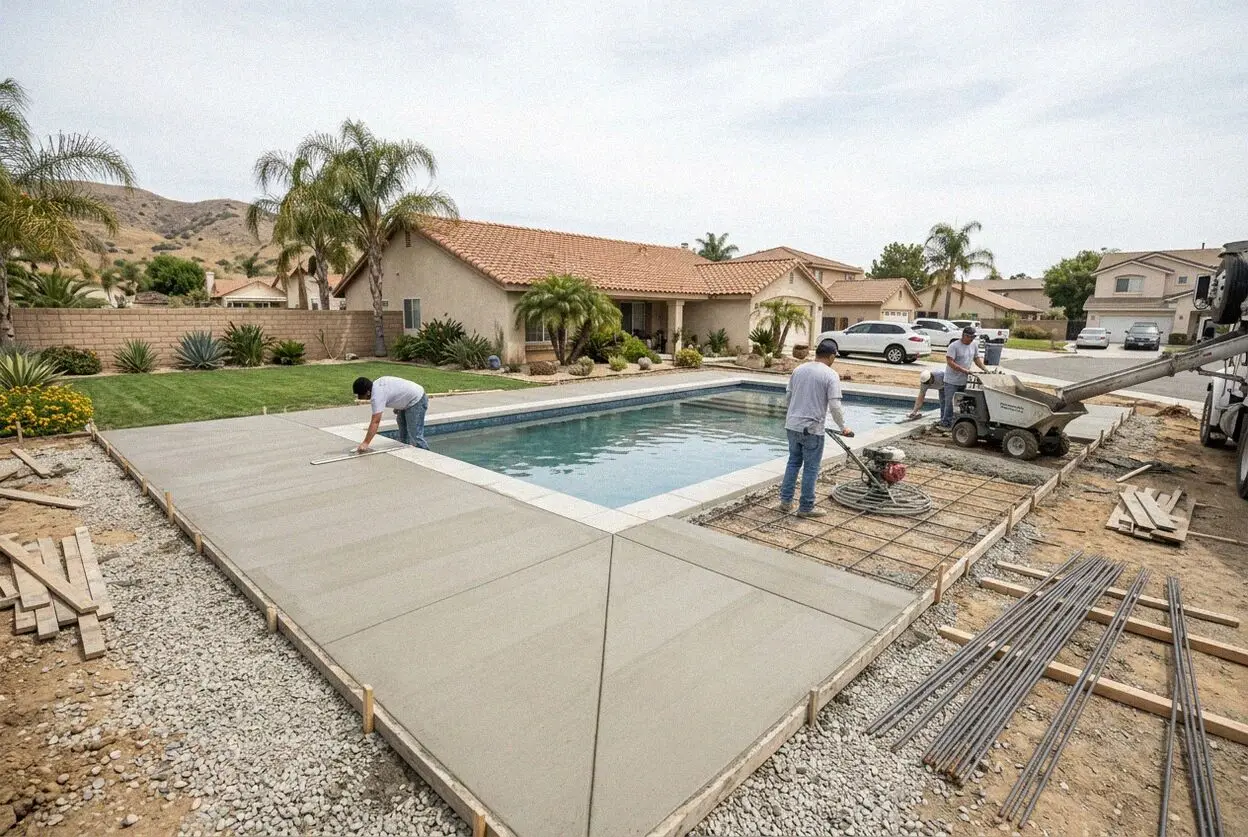
Every pool deck here sits on the ring of backfill left around its shell, and most sit in a yard so small that the deck is a walkway on three of its four sides.
The native ground is San Gabriel River wash, sand and rounded gravel that drains in minutes and takes a plate compactor well. A pool builder digs the shell wider than the pool, plumbs it, and pushes that same sand back into the gap in one push, uncompacted, because the deck is somebody else's job. That ring stays loose. Rain, splash and the backwash line find it, and it goes down a fraction each wet season. A deck poured over it drops with it, and the shell stays put.
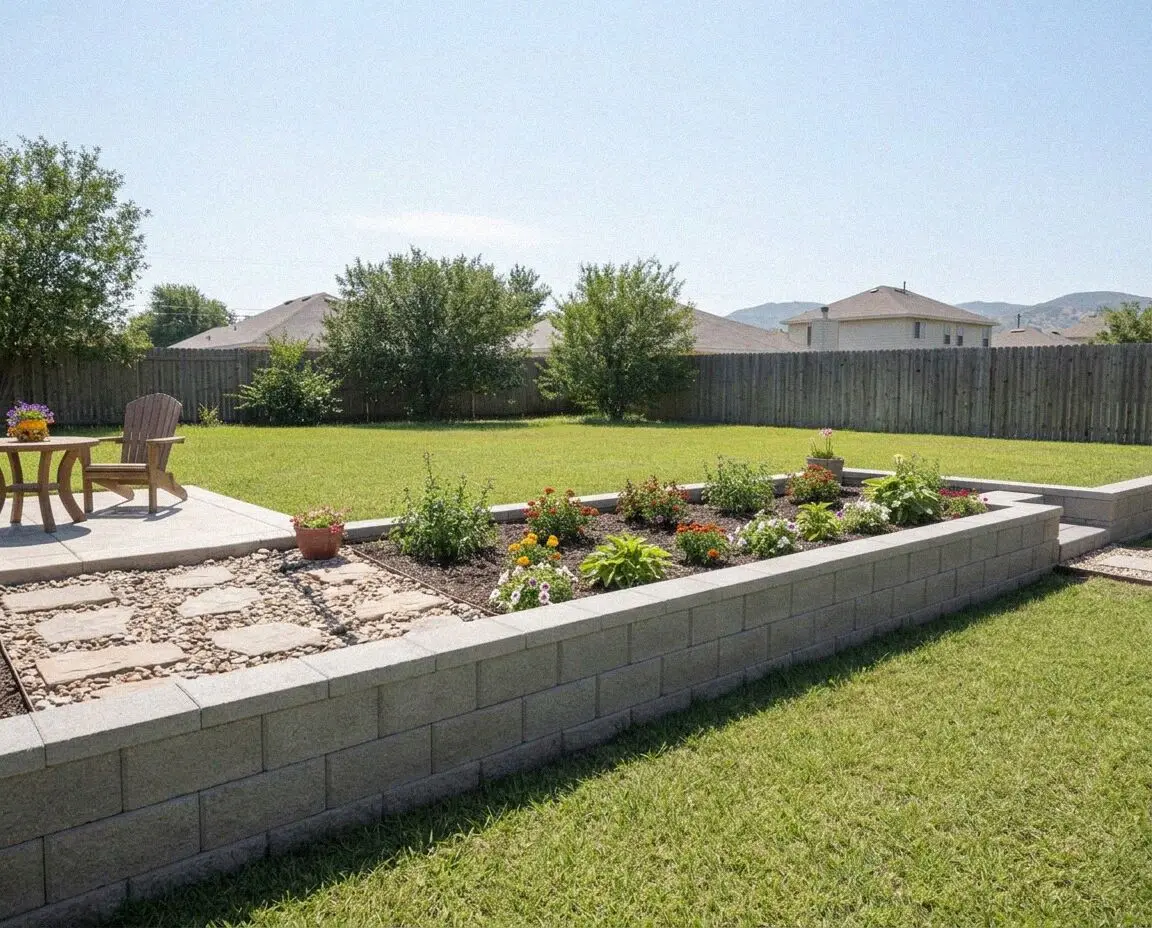
The yard is the second. Lots on the postwar tracts here are narrow, and a pool went into many of them decades after the house, with a fence on one side and the house on the other. That leaves a deck three or four feet wide down two sides, too narrow for a proper fall or a joint pattern that keeps cracks straight, so the fall goes to a slot drain along the fence. Where the ground steps up behind, a retaining wall is poured with the deck.