Concrete Driveway Building
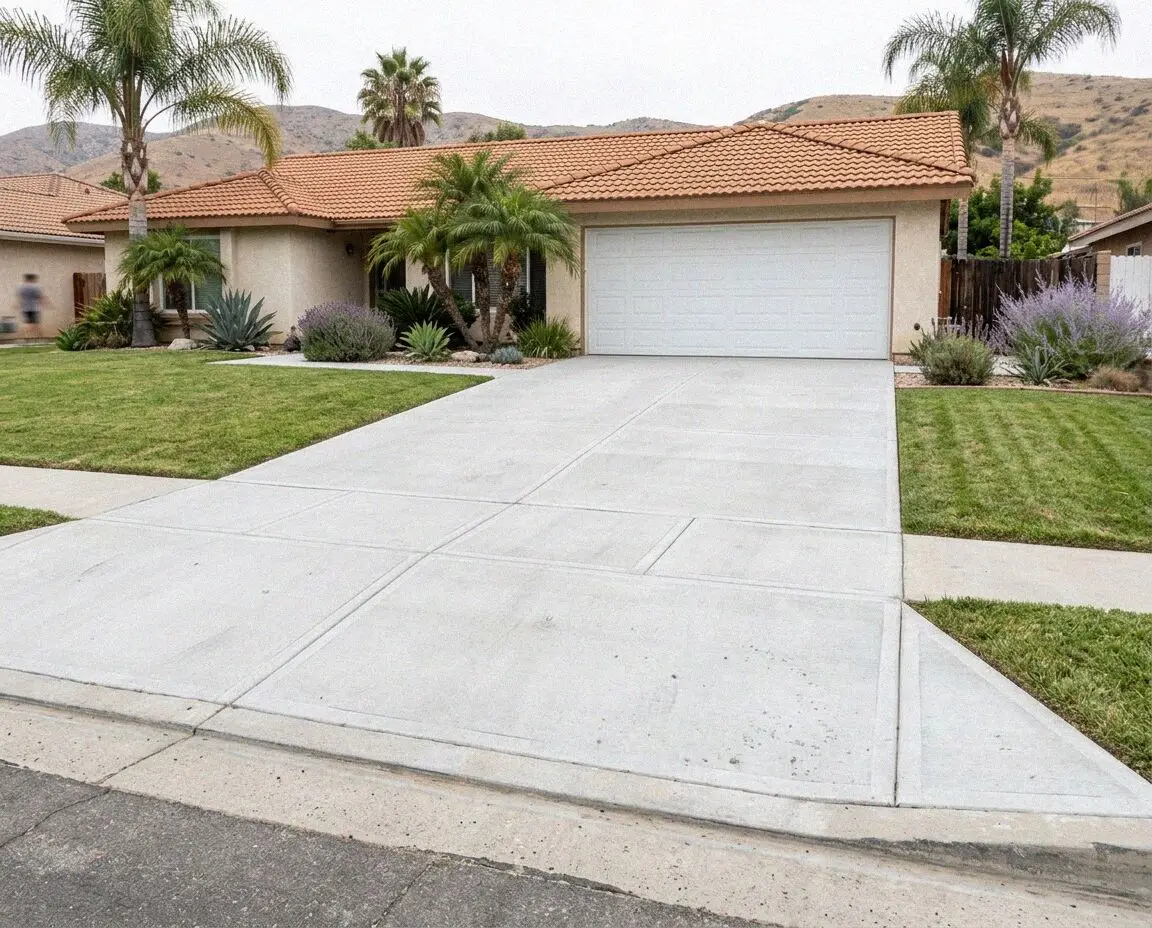
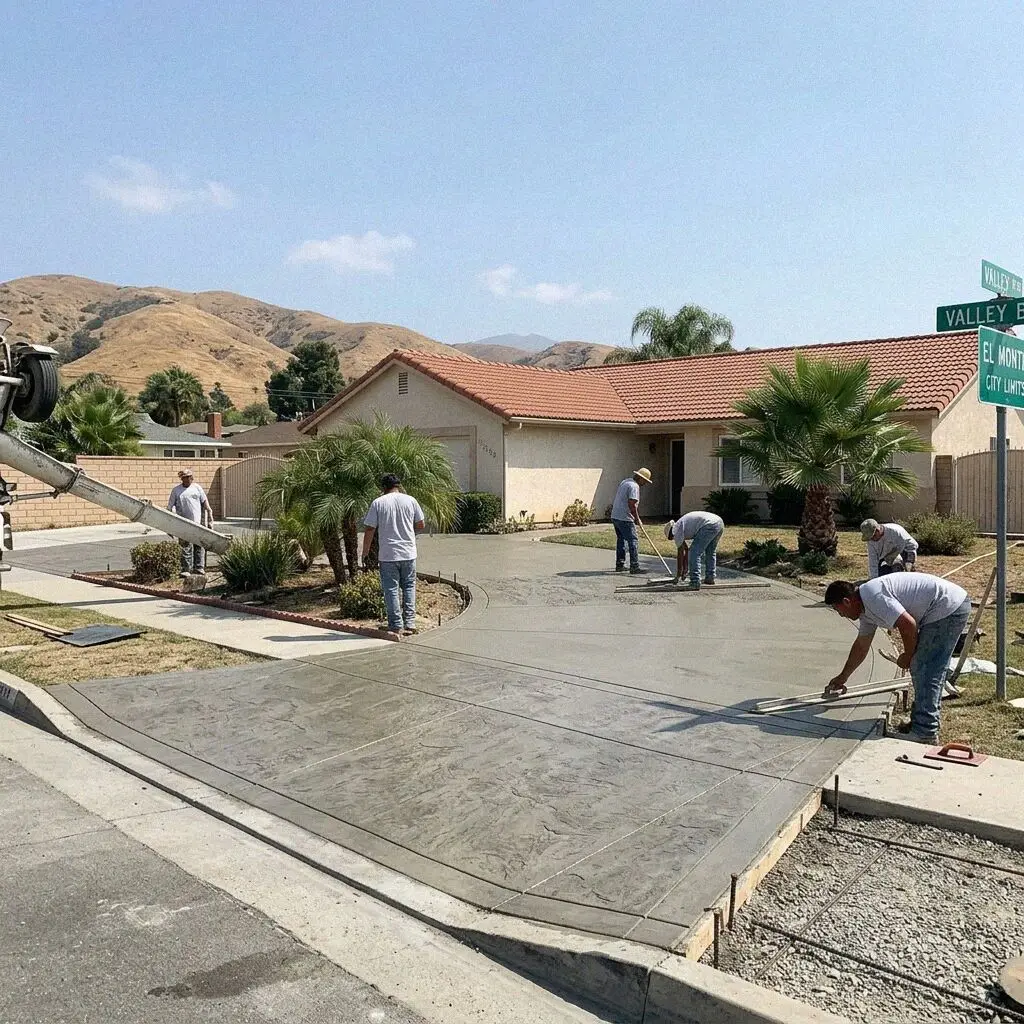
A drive that has dropped over an old service trench: dug back to firm sand, rolled, poured 4 inches and sawn the same afternoon it goes down.

Driveways, patios, garage floors and public walks, poured on the sand and rounded gravel two rivers left across this valley floor. Ring and someone measures the work at your address before a date is booked.


 5.0 Stars How our customers score us · Facebook, Google and the BBB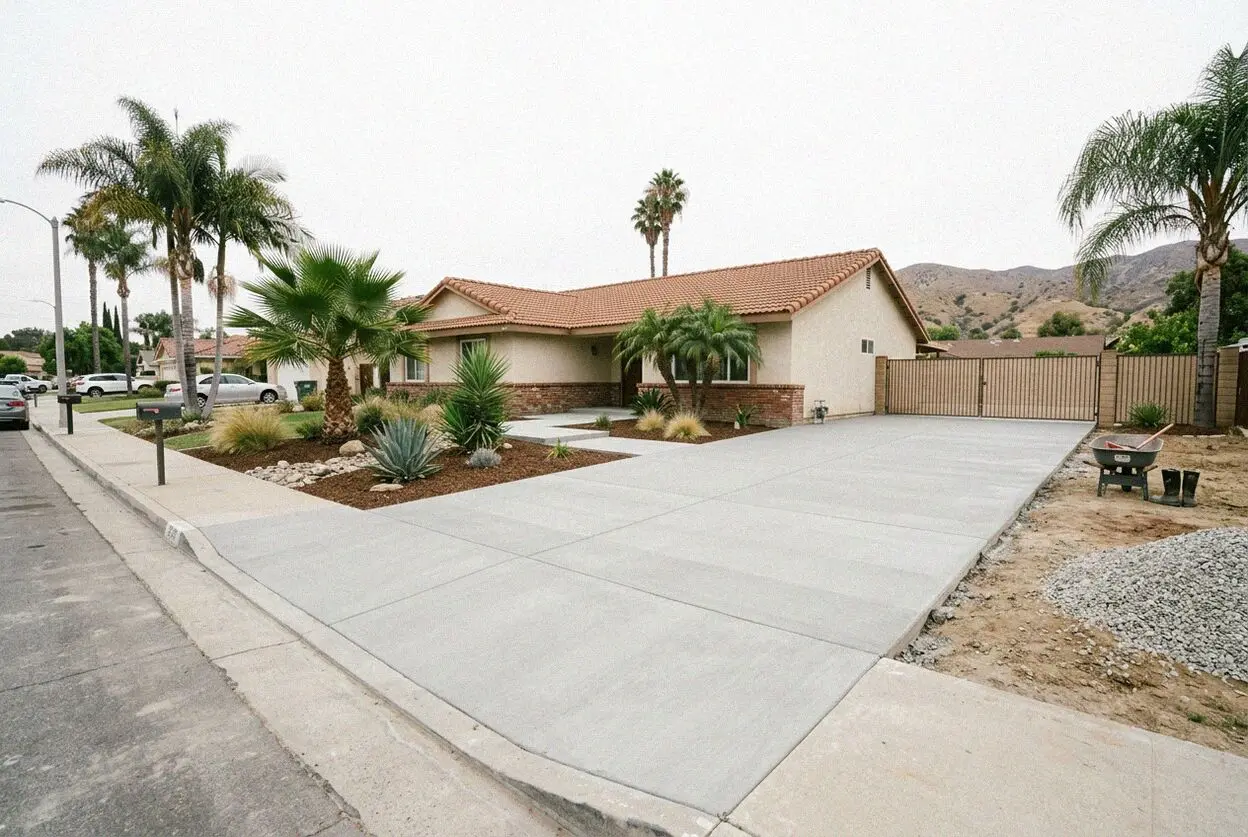
Rio Hondo El Monte Concrete pours for all of El Monte, the 1912 townsite around Valley Boulevard, the tracts that took over the walnut ground either side of the 10, and the commercial frontages out toward Flair Park. A driveway that has dropped at the apron, a garage floor going in under a new ADU, a public walk a street tree has lifted: all of it built to California code.
A drive that has dropped over an old service trench: dug back to firm sand, rolled, poured 4 inches and sawn the same afternoon it goes down.
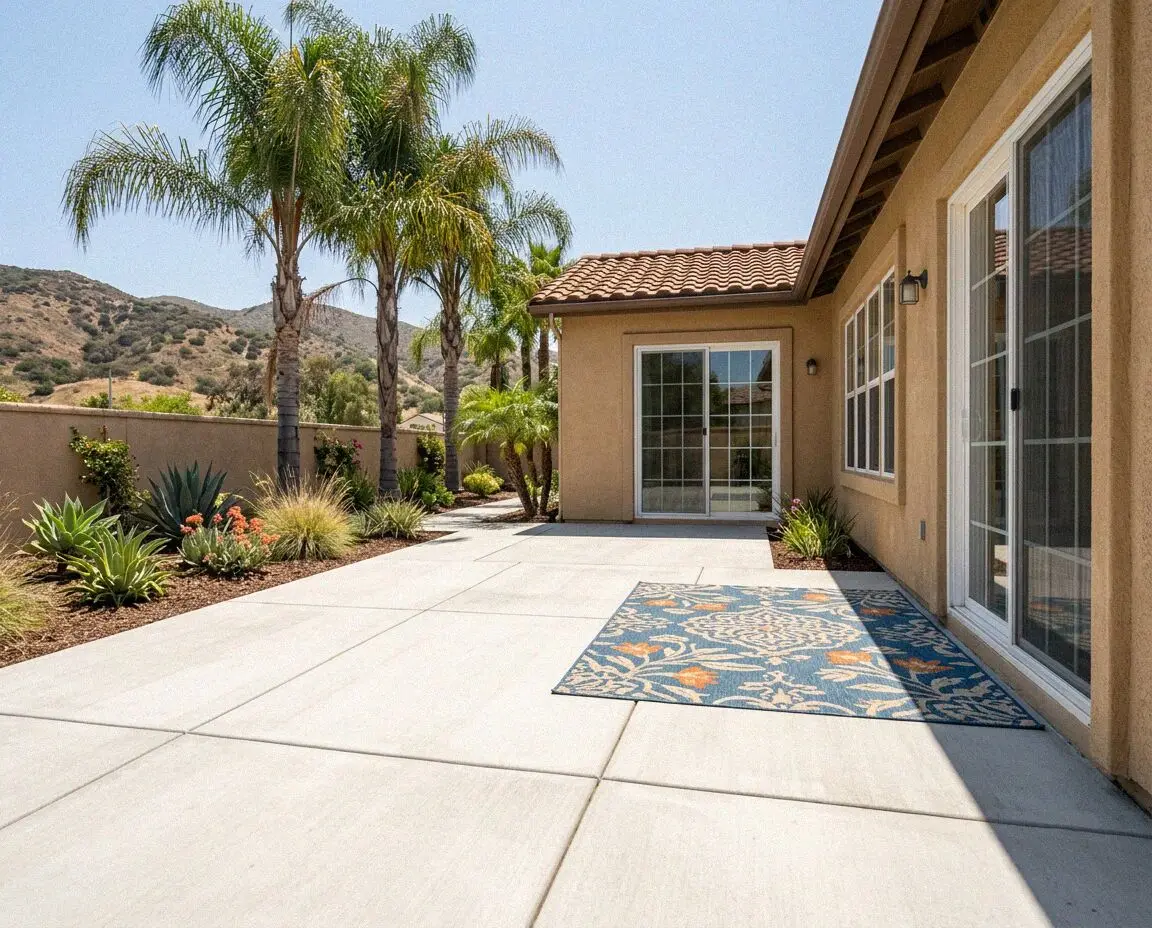
Patio dipping in the middle or cracked across the grid? We open the pad, dig the old fill out, pour 4 inches and saw the joints the same day.
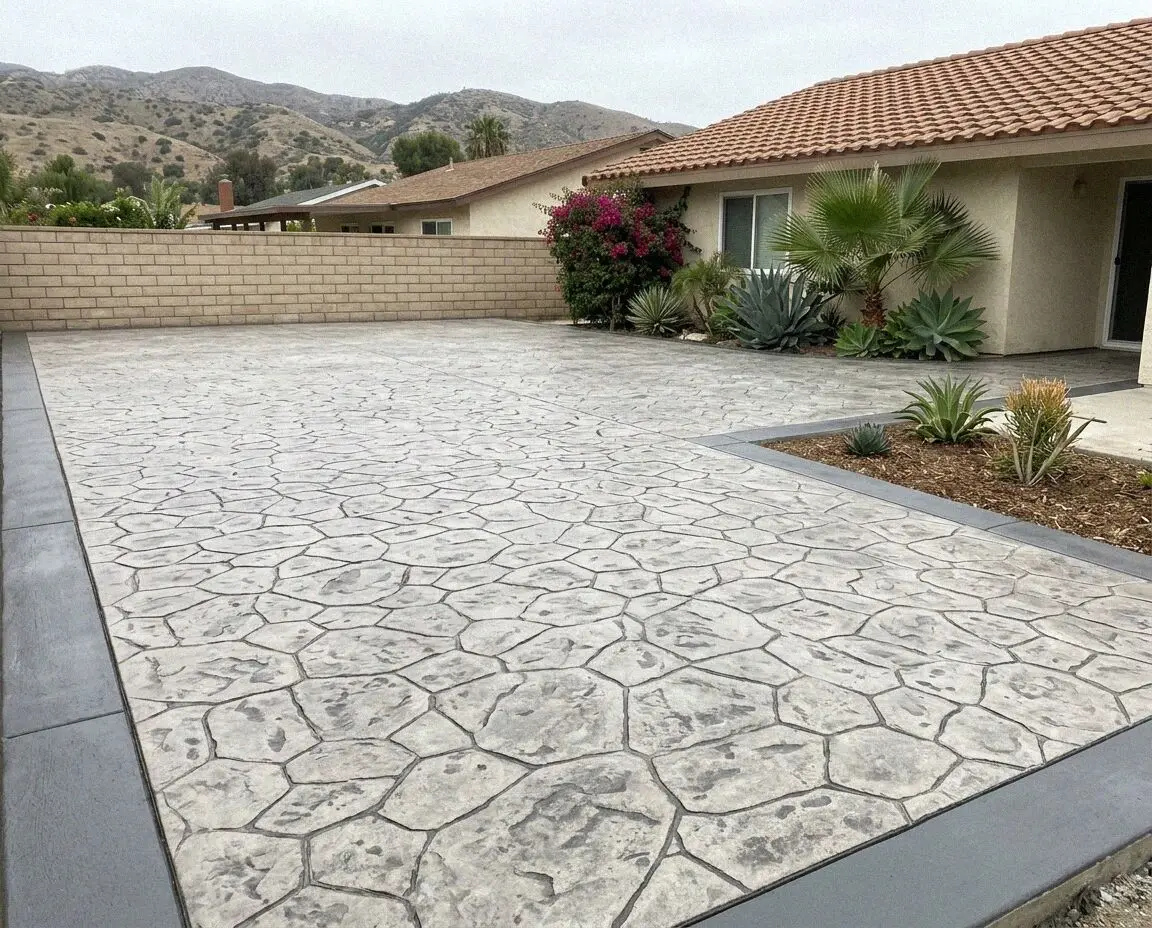
A pattern that has to be pressed before the sand and the sun set the slab, so it is poured at first light on a soaked bed and colored twice.
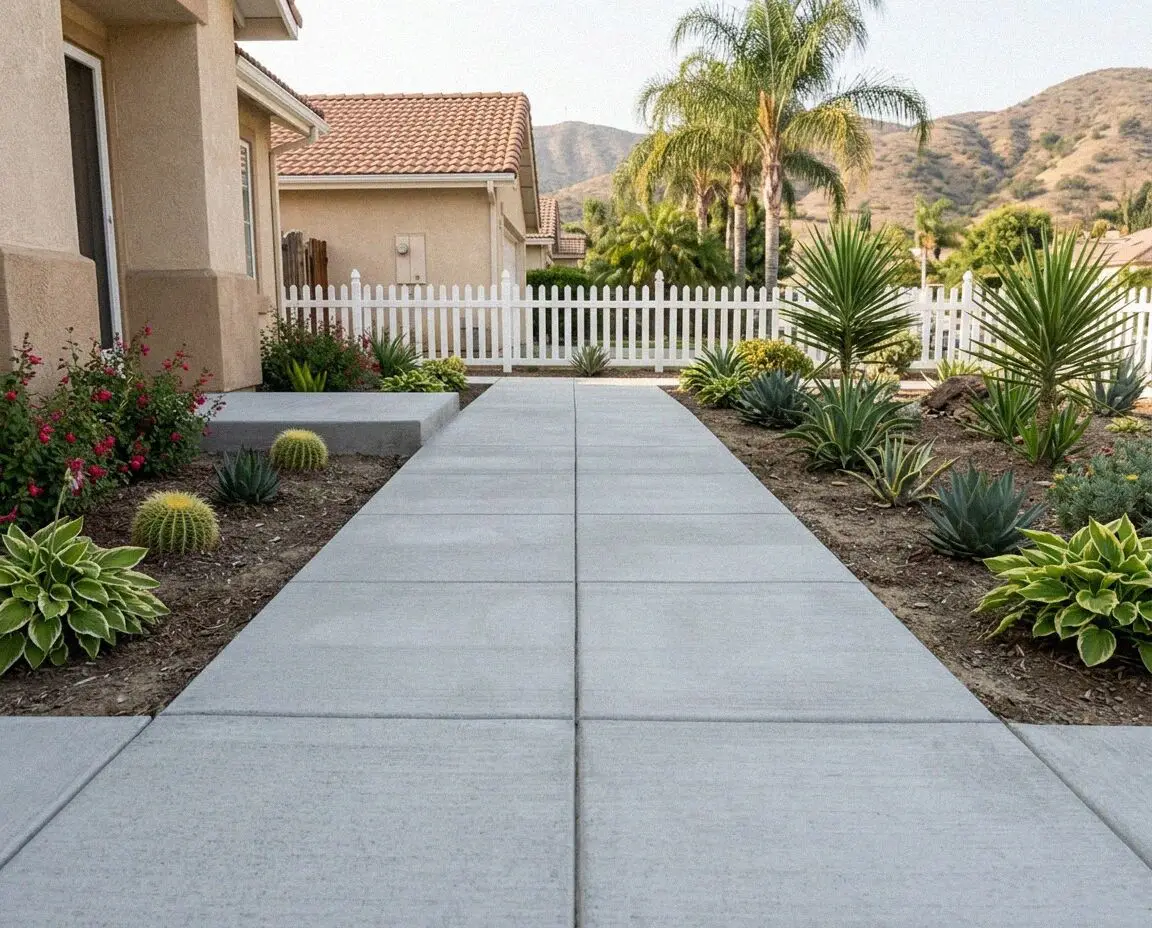
Lifted or dropped walk at your frontage? Bays cut out on their own joints, the old trench fill dug out, and a full 4 inches put back down.
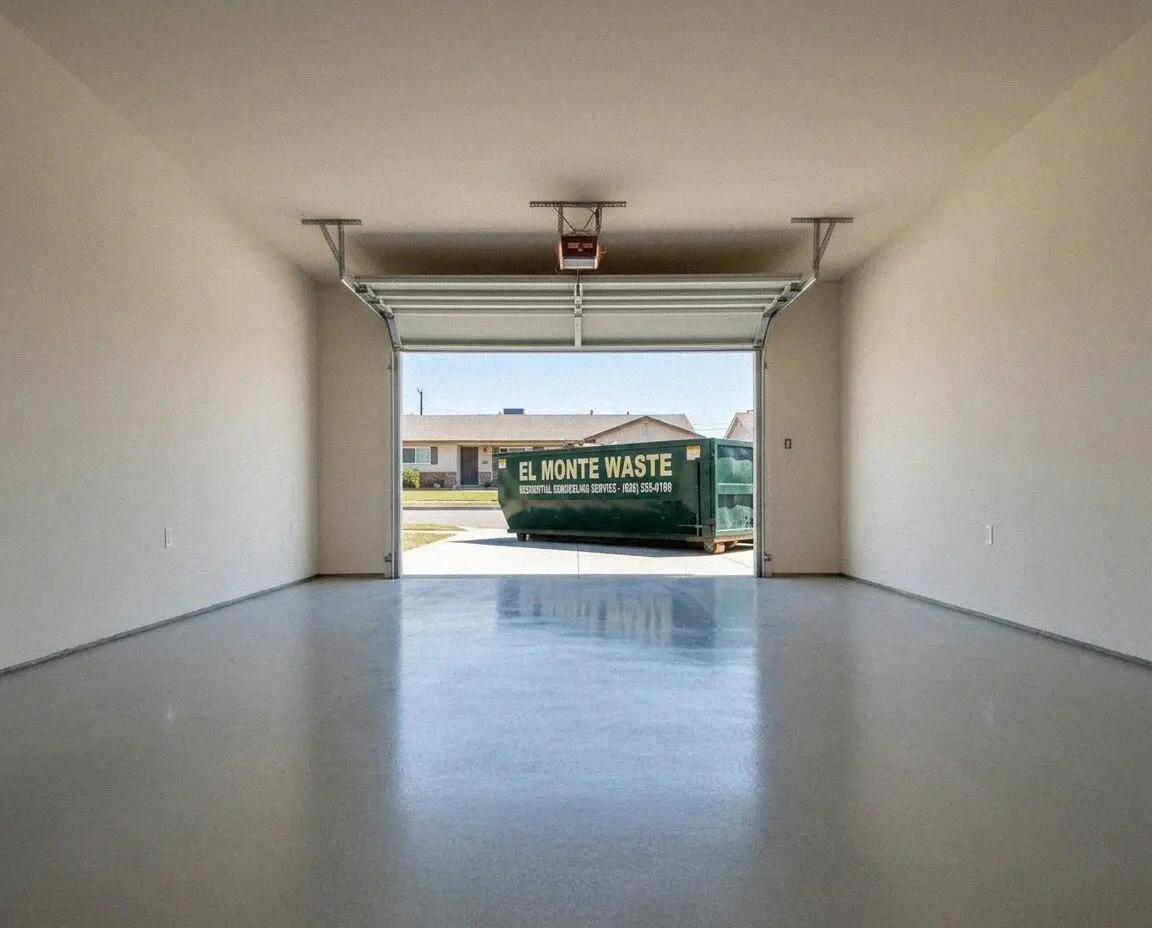
Bay floor rusting the shelf feet, lifting its coating or dished under a jack? We take it out, sheet the ground and pour to the load that stands on it.
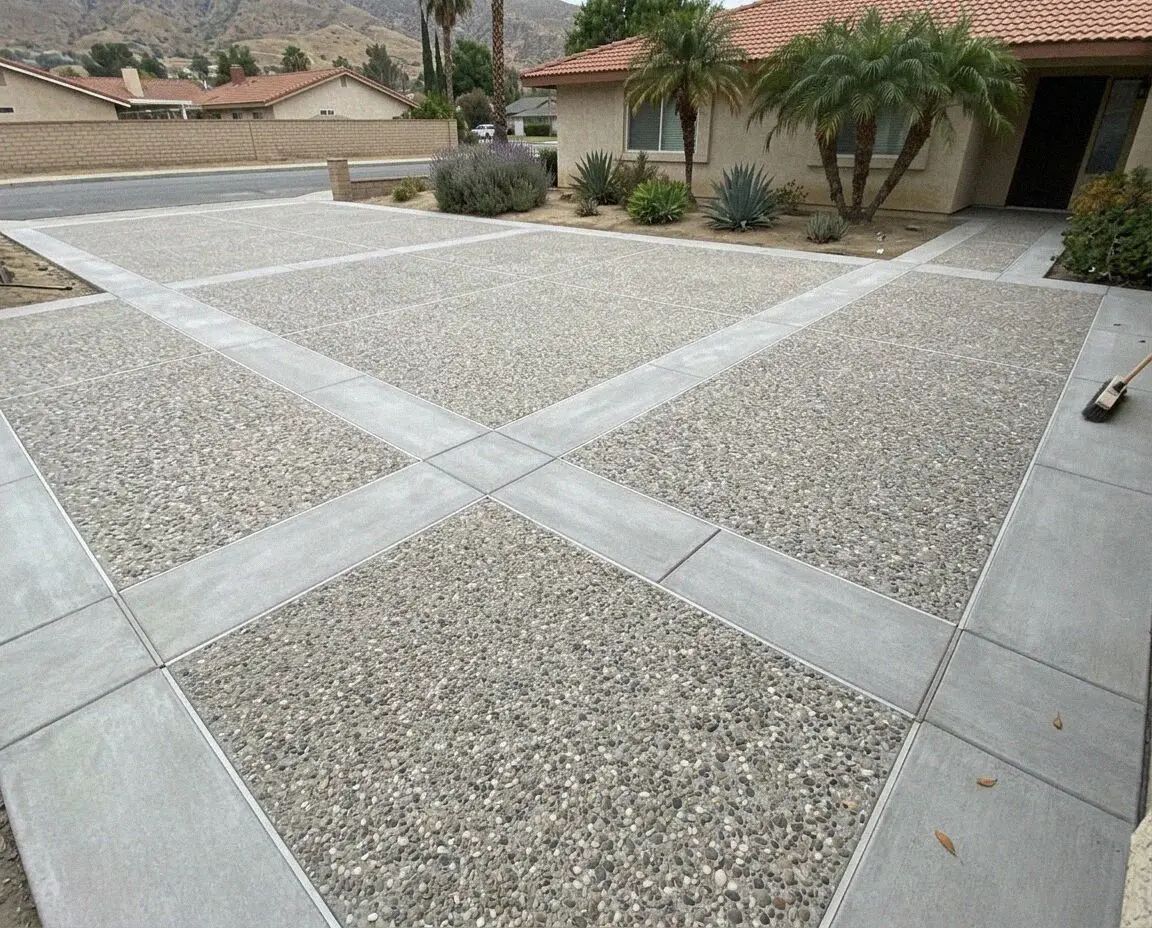
A washed or textured finish that shows the rounded river stone the town stands on, poured 4 to 5 inches deep on a court that takes a car.
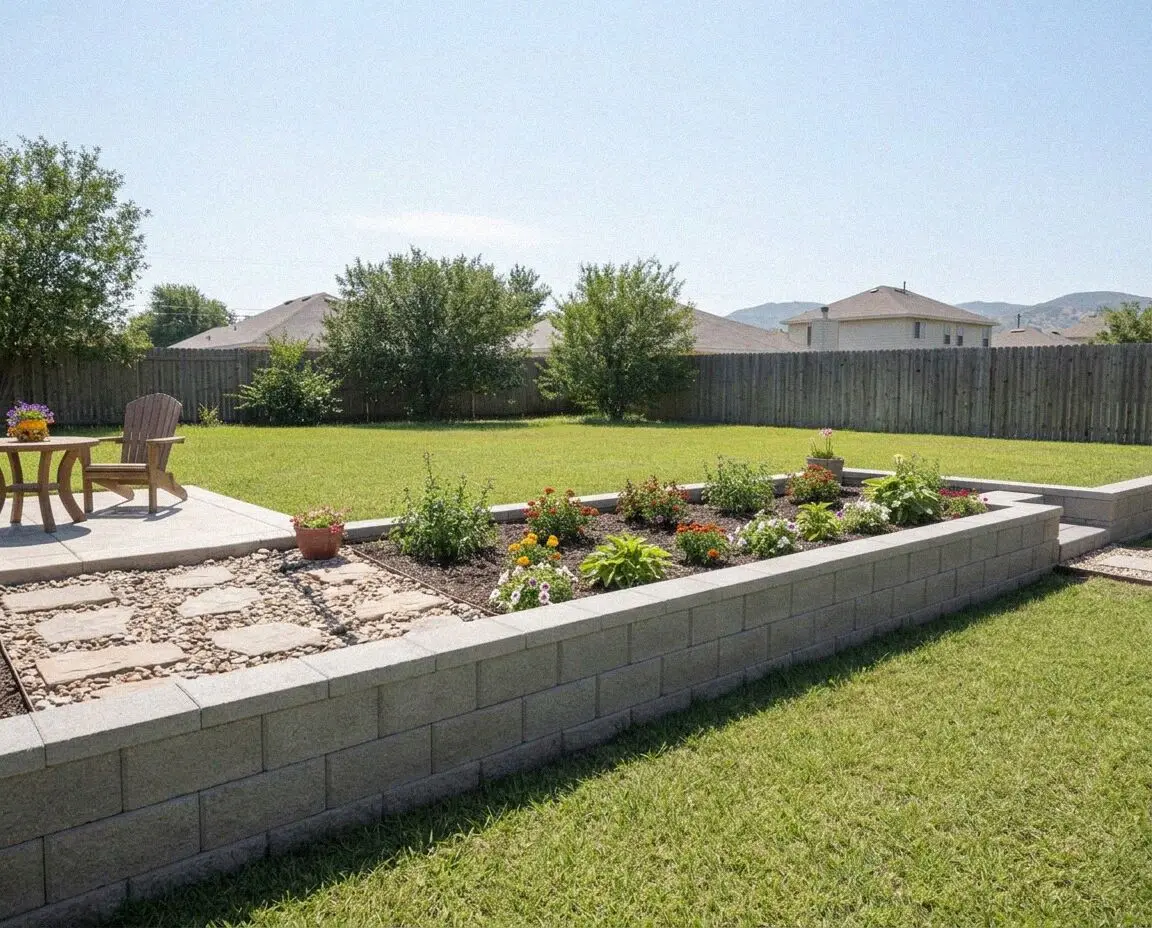
A wall footed on native sand and drained at the heel, holding a rear pad, a terrace or a planter on a lot where the ground itself is flat.
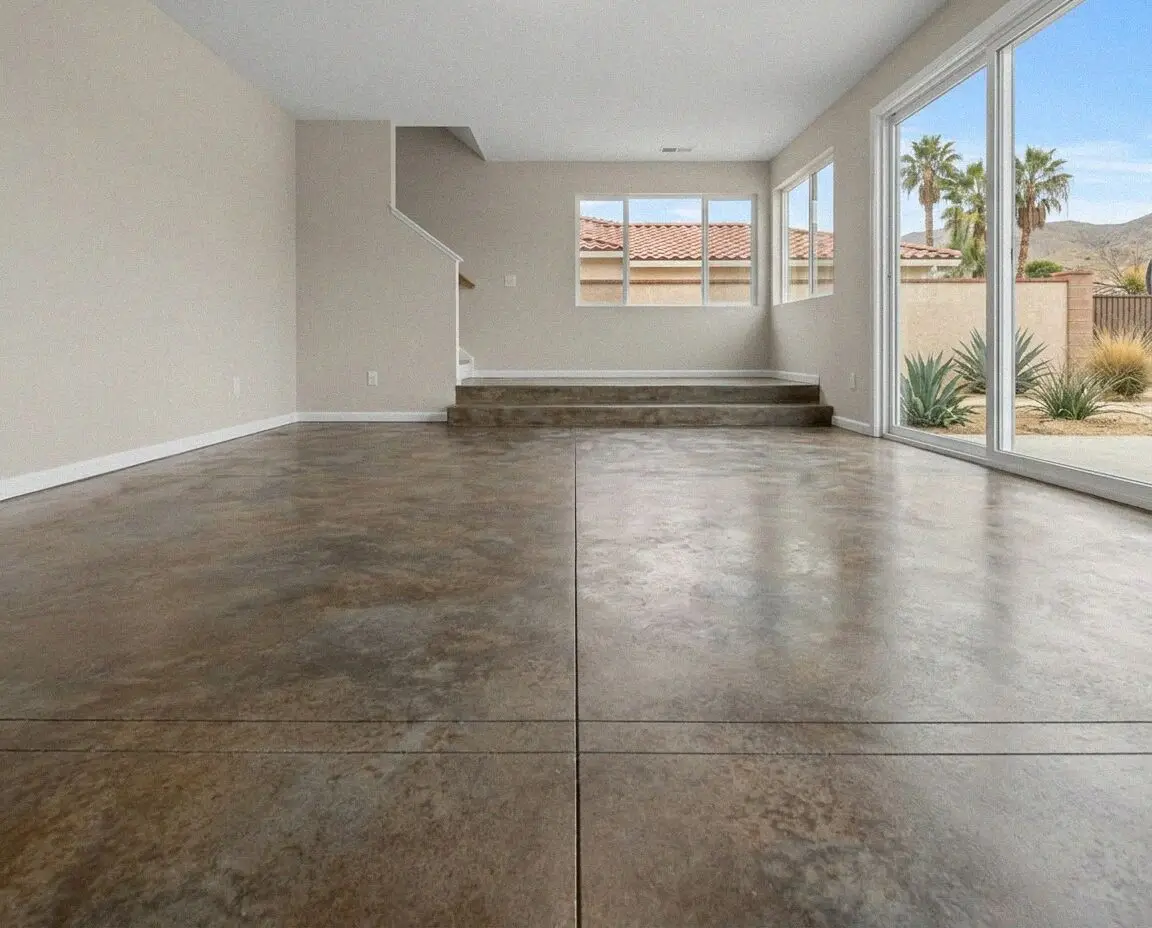
An interior floor doweled to the slab beside it and struck to the old height, over a sheet, for a leak repair, an addition or a fill-in.
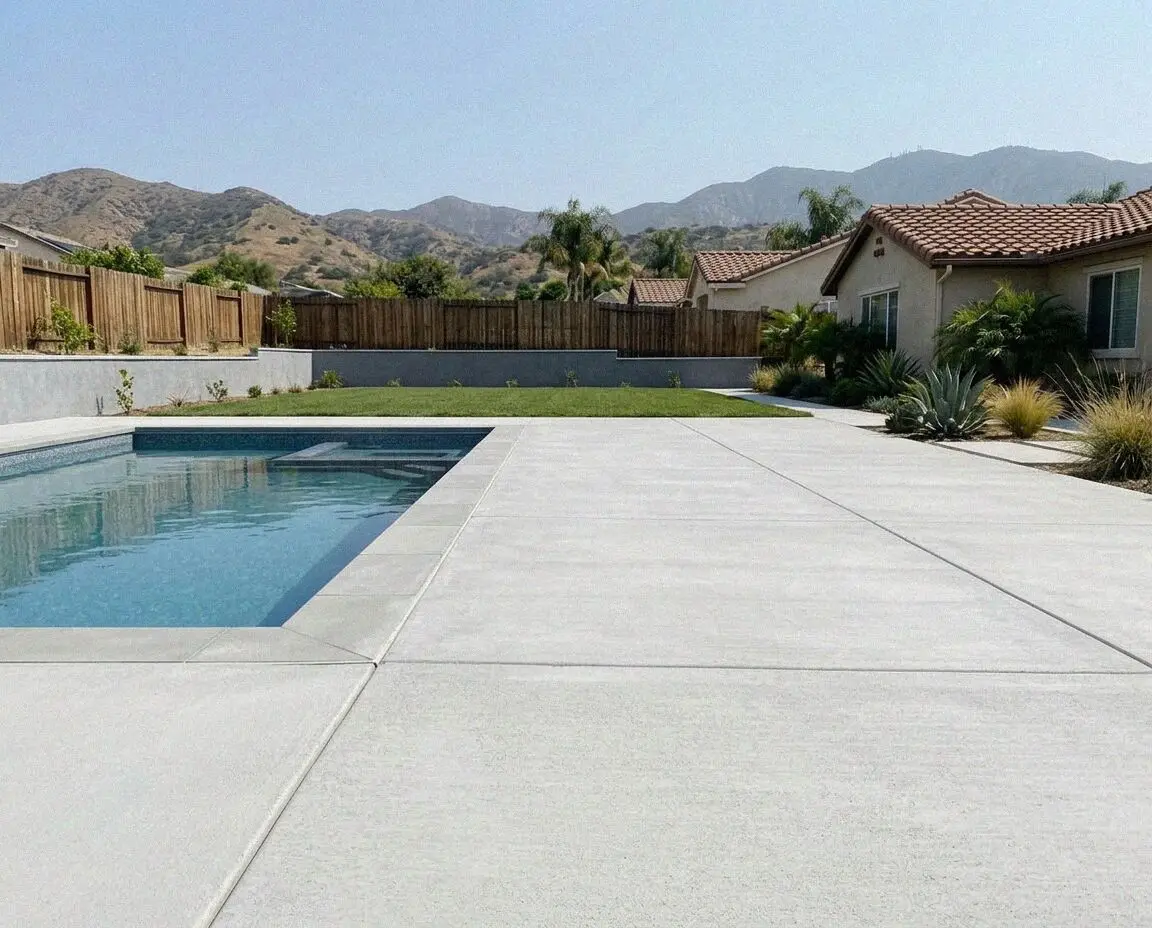
Sunken lip at the coping? A new deck poured on the compacted ring around the shell, with fall off the water and a soft joint at the coping.
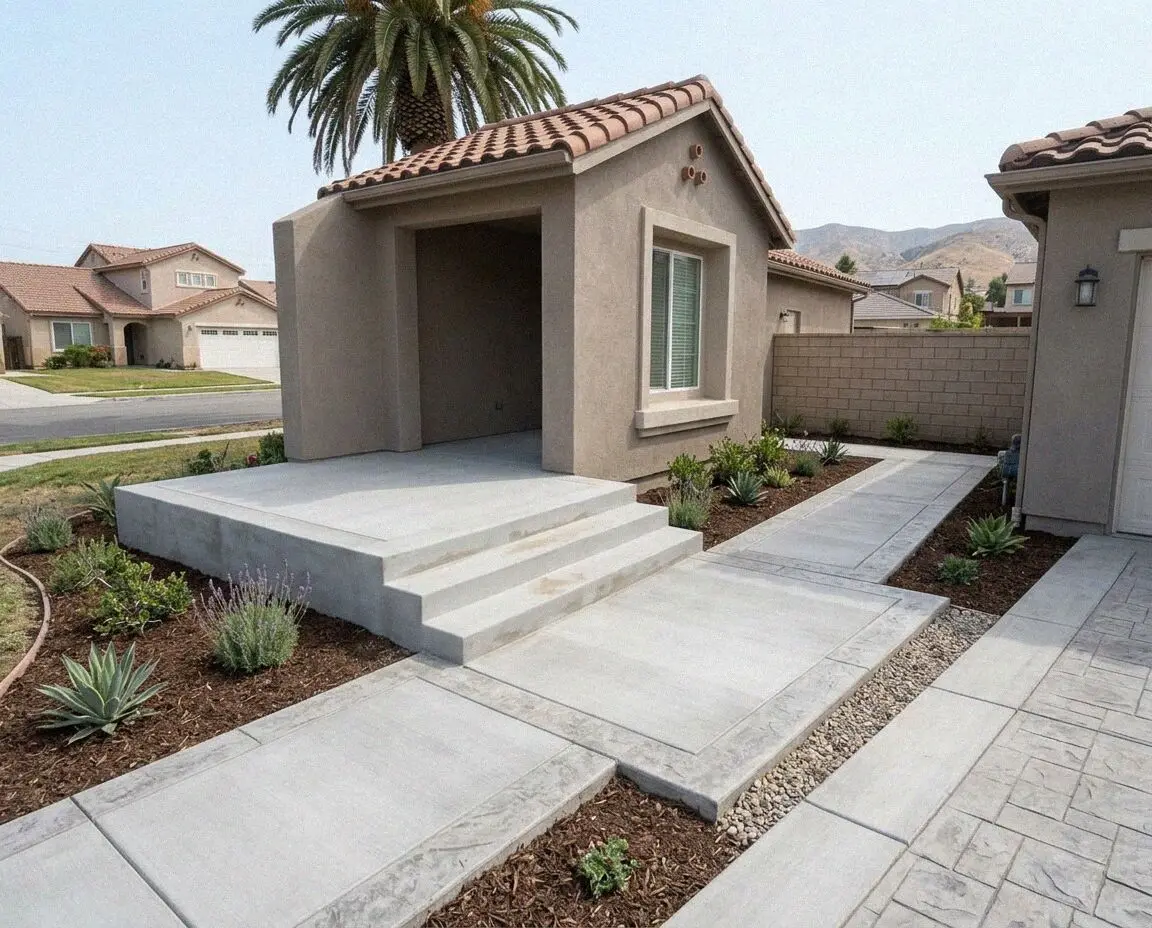
Steps pulling away from the door? A new flight poured solid on compacted base and doweled into the stoop, with every riser the same height.
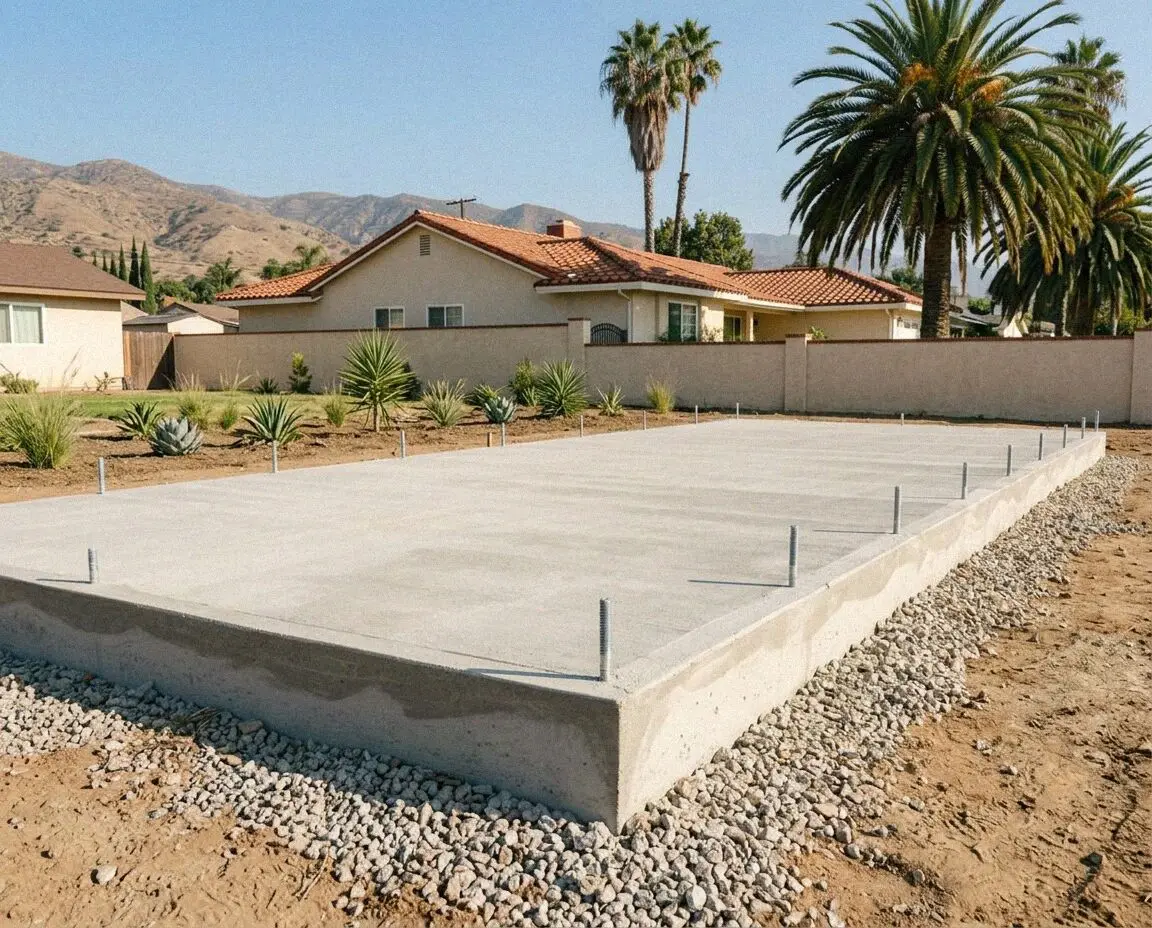
The floor and the foundation in one pour, for a rear unit, a conversion or an addition. Sealed bed, turned-down edge, bolts cast in wet.
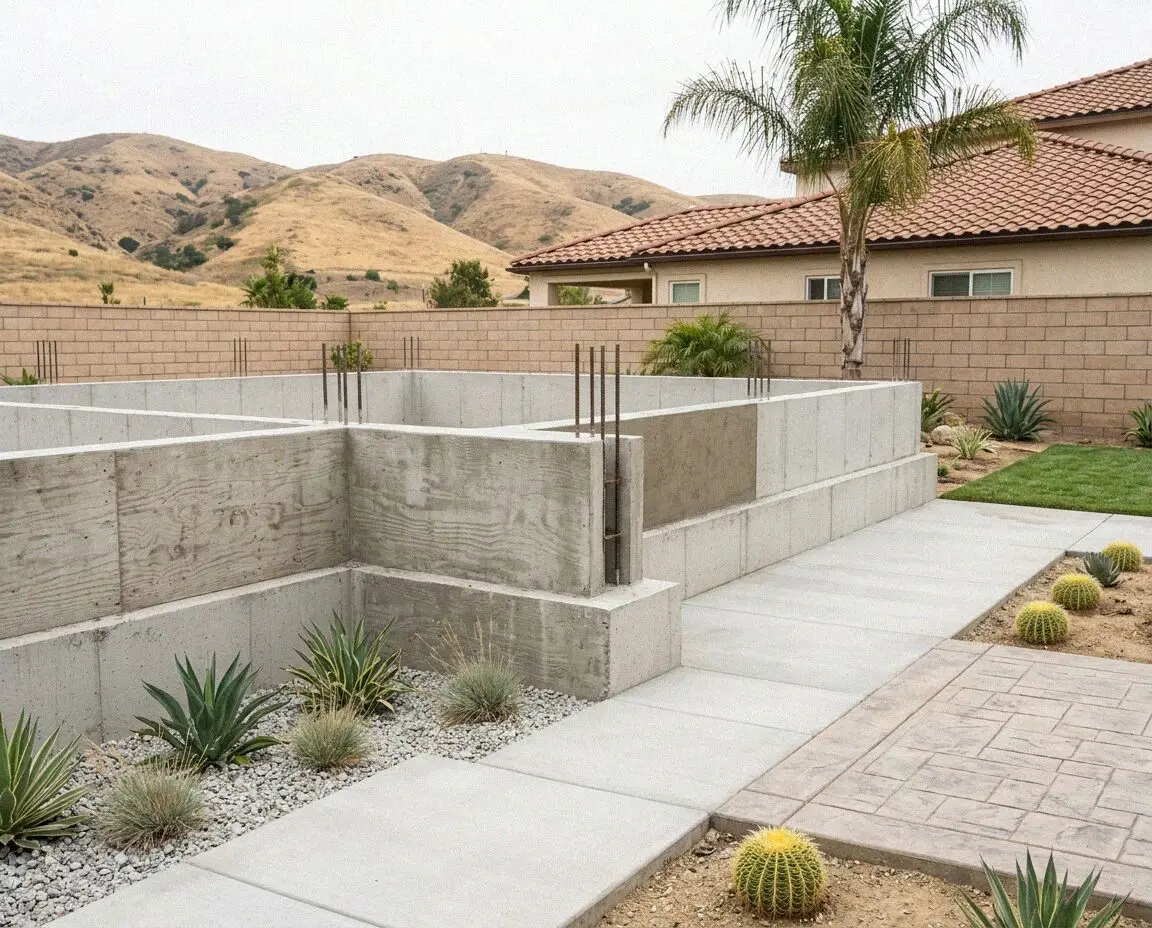
The footing and stem wall system a framed house stands on, dug to clean sand, tied to the engineer's sheet and passed at every inspection.
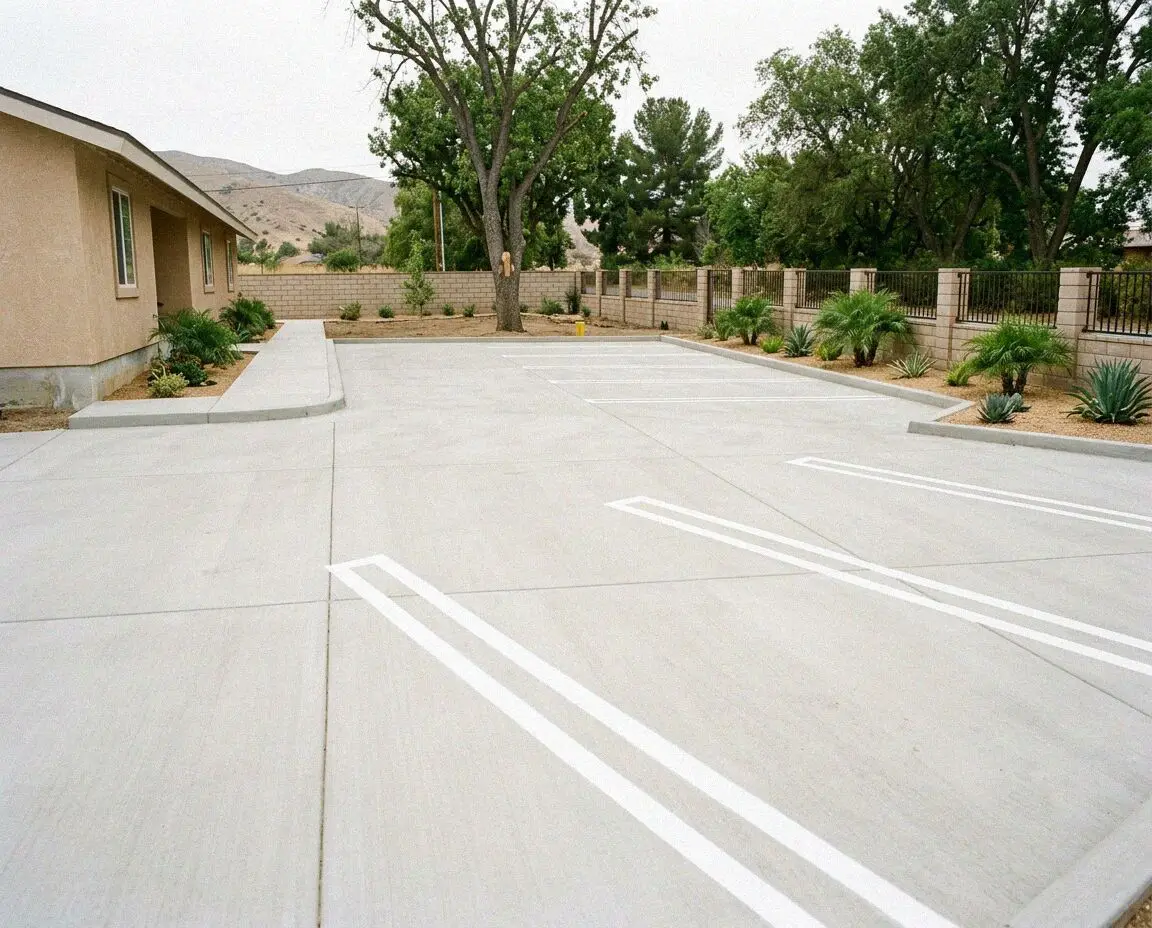
A lot built in two depths, 5 inches under the stalls and 7 or 8 on dowels where the trucks run, on base proof-rolled and graded to the drain.
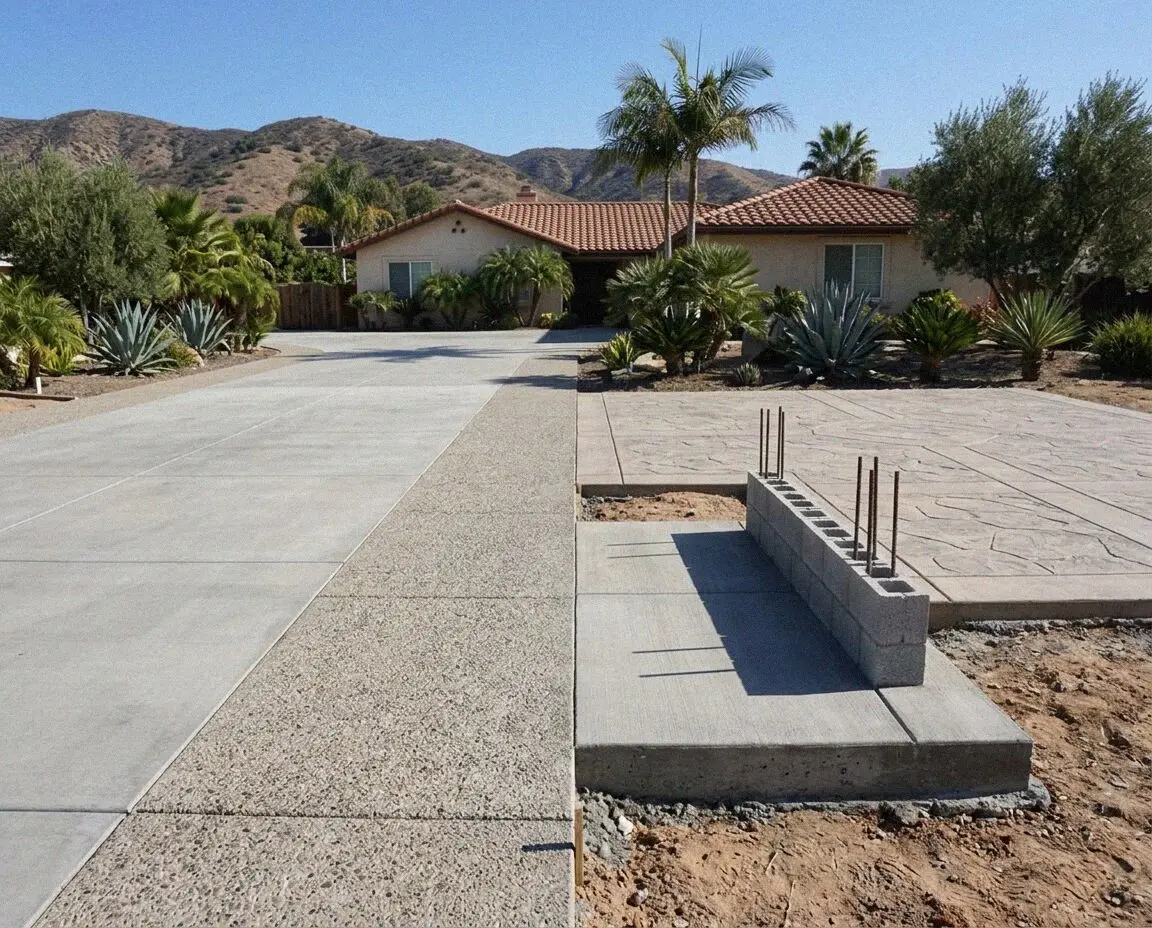
A footing dug to native sand, formed to the width drawn, tied with number 4 bar and inspected open, under the addition the lot never had.
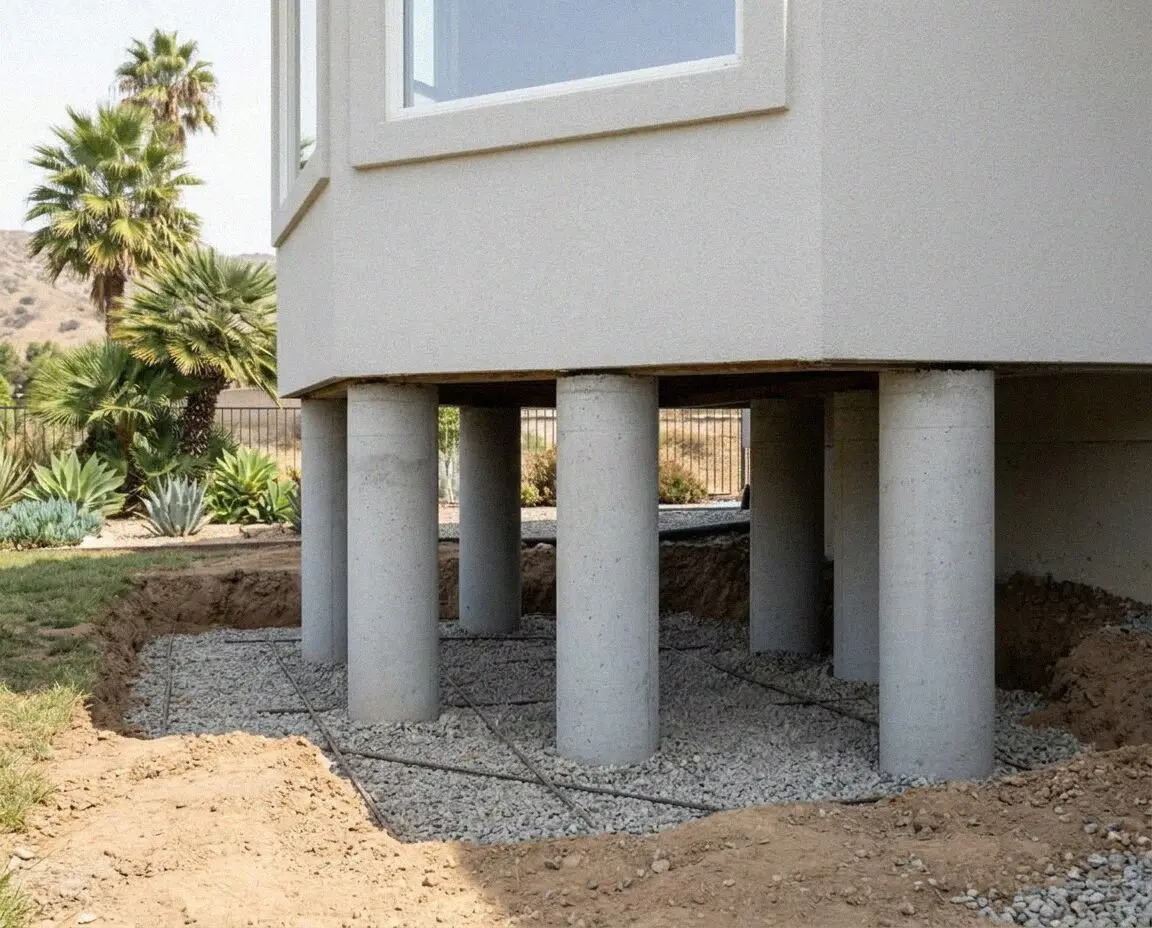
A settled house raised on piers driven to a proven depth, after the leak that washed the sand out from under the footing has been found.
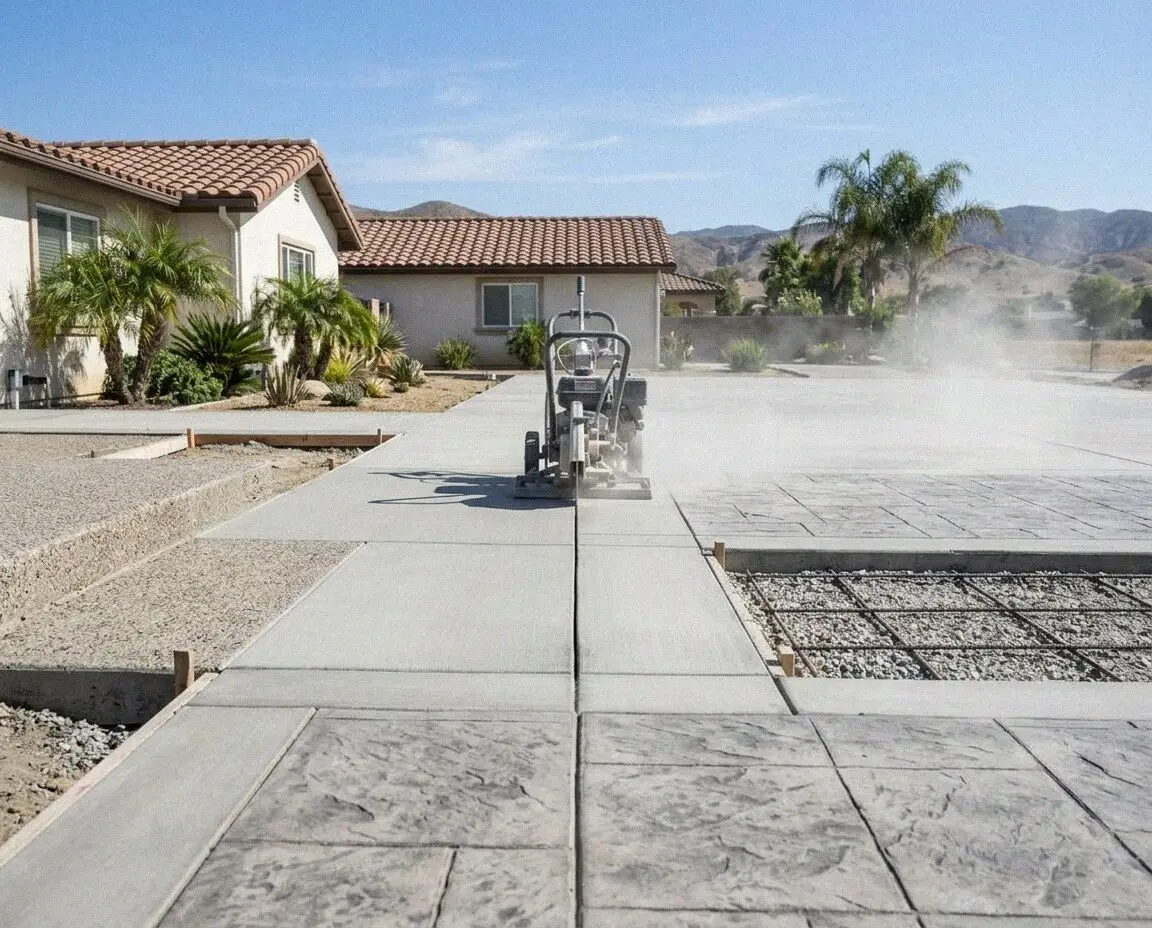
Trenches, openings and cores sawn through thin post-war slabs after a scan, full depth in one pass, the floor around the cut left whole.
Four steps take a job from the phone call to concrete you can park on. The figure is written at step two by the man who pours it, and he is here at step three when the truck arrives.
Say what the job is, by phone or through the form. Someone rings you back within 1 business day and the free visit goes in that week.
We walk it, open the ground to see what the old slab sits on, then set out demolition, base, depth, finish and clean-up separately.
Once the figure is agreed we file whatever the city wants, book the truck, and run it through: break out, base, forms, pour, finish, joints.
We clear the site, then go round the finished work against your estimate, depth, base, joints, edges, and close it when you are happy.
The classification is C-8 Concrete, on the register at the California Contractors State License Board and searchable under our name. We also carry liability insurance on every job, so a mixer standing on your frontage and a saw running on your walk are our exposure and not yours.
Ismael Duarte has worked concrete here for 21 years and has run the business since 2015. Where the old grid hides loose backfill, how a three-foot side yard is reached and which counter takes which permit are things you learn on the street, not off a map.
The visit costs nothing. On lots this narrow the first measurement taken is the way in, because a gate under three feet turns a pour into barrow work and that is hours rather than material. Breaking out, hauling, base, pour, finish and clean-up are priced apart.
What you sign carries a written workmanship guarantee against defects in how it was built. Here the usual call-back is a slab dropped over a trench backfilled loose, and we redo it. Everyday wear, and soil moving past what the joints allow, sit outside that, in writing.
Not sure what your job needs? (626) 774-7973 or send us a message.
In Their Words
Three jobs off El Monte streets since last year, described by the people who footed the bill: a drive that had dropped, a floor that dusted, and a run of public walk a tree had wrecked.
“Our drive had sunk where the water line went in years ago and you could feel it in the car. They dug the soft fill right out, rolled clean base into it and put 540 square feet down at four inches. Ismael was here at seven in the morning and the saw went over it before he went home.”
“A ficus outside our place on Ramona had lifted two panels and we were getting complaints about it. They sawed out on the joints, cut the roots back behind a barrier, laid seventy feet of new walk and took care of the encroachment permit themselves. Nobody catches a foot on it now.”
“We use the garage as a workshop and the old floor was cracked right across, with the edges crumbling away wherever you swept. It came out, a heavy sheet went down over the sand, and five inches of new floor went on top. A year of trolley jacks and there is not a mark on it.”
Who You Are Hiring
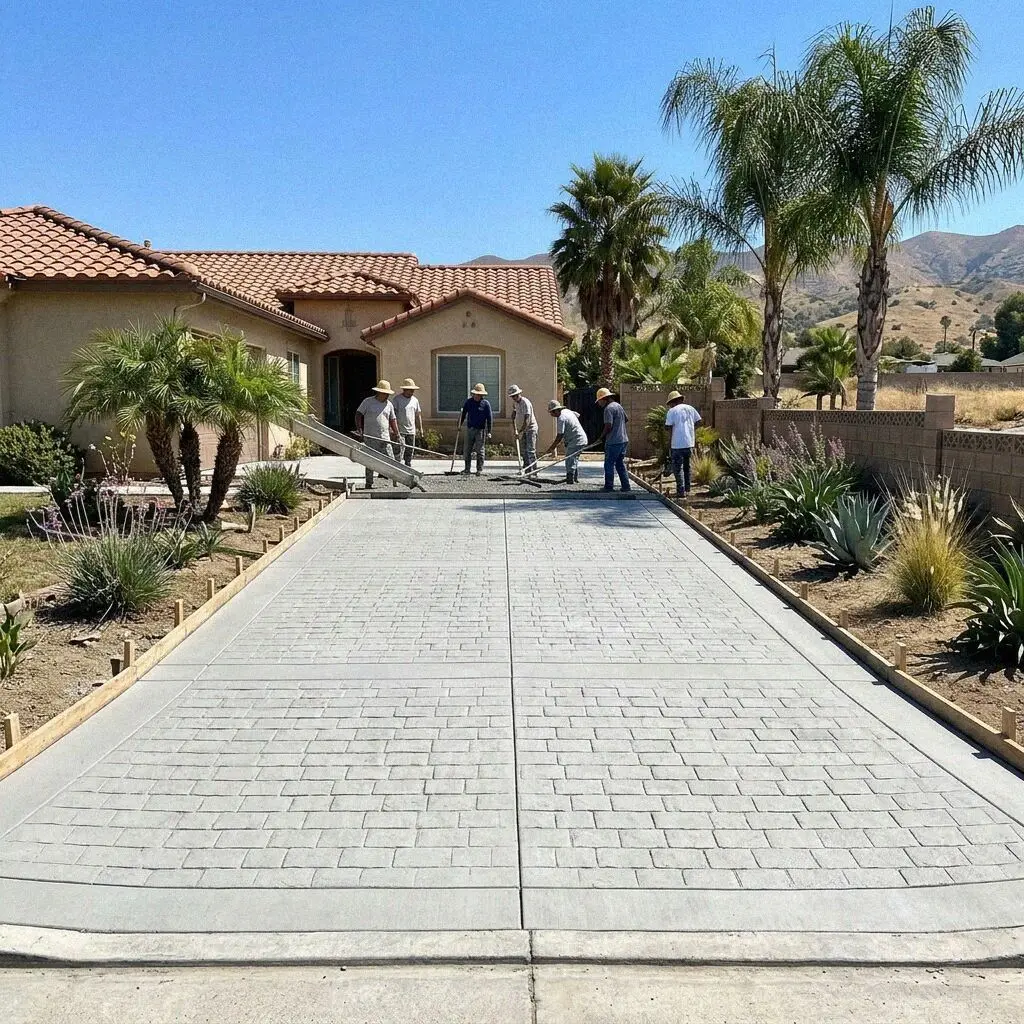
Rio Hondo El Monte Concrete is a concrete contractor owned and run from Peck Road in El Monte, CA. Ismael Duarte started it in 2015 with 21 years of the San Gabriel Valley crews behind him, and the round now takes in 20 towns, every one of them inside Los Angeles County.
The city was incorporated in 1912 and then filled up in a hurry: 13,163 people at the 1960 census and 69,892 at the next one, walnut ground turned into small-lot tracts inside a decade. That is why so much of what we break out dates from the 1950s and 1960s, and is now past the 30 to 40 years a slab laid properly is good for.
Permits are filed at Building & Safety in City Hall West on Valley Boulevard, and whoever poured the slab is the one who meets the inspector, you do not need to be home for it. liability insurance on every job is in force before a saw is started. Every estimate is measured and written on site.
The Specification
None of this moves with the size of the job. Loose backfill comes out before anything is compacted, depth is set by whatever ends up standing on the finished slab, and no slab waits overnight for its joints.
Six jobs on streets you already drive down, a drive off Durfee, a garage floor near Norwood, a run of walk on Ramona Boulevard. Any of them is worth a look before you decide anything.
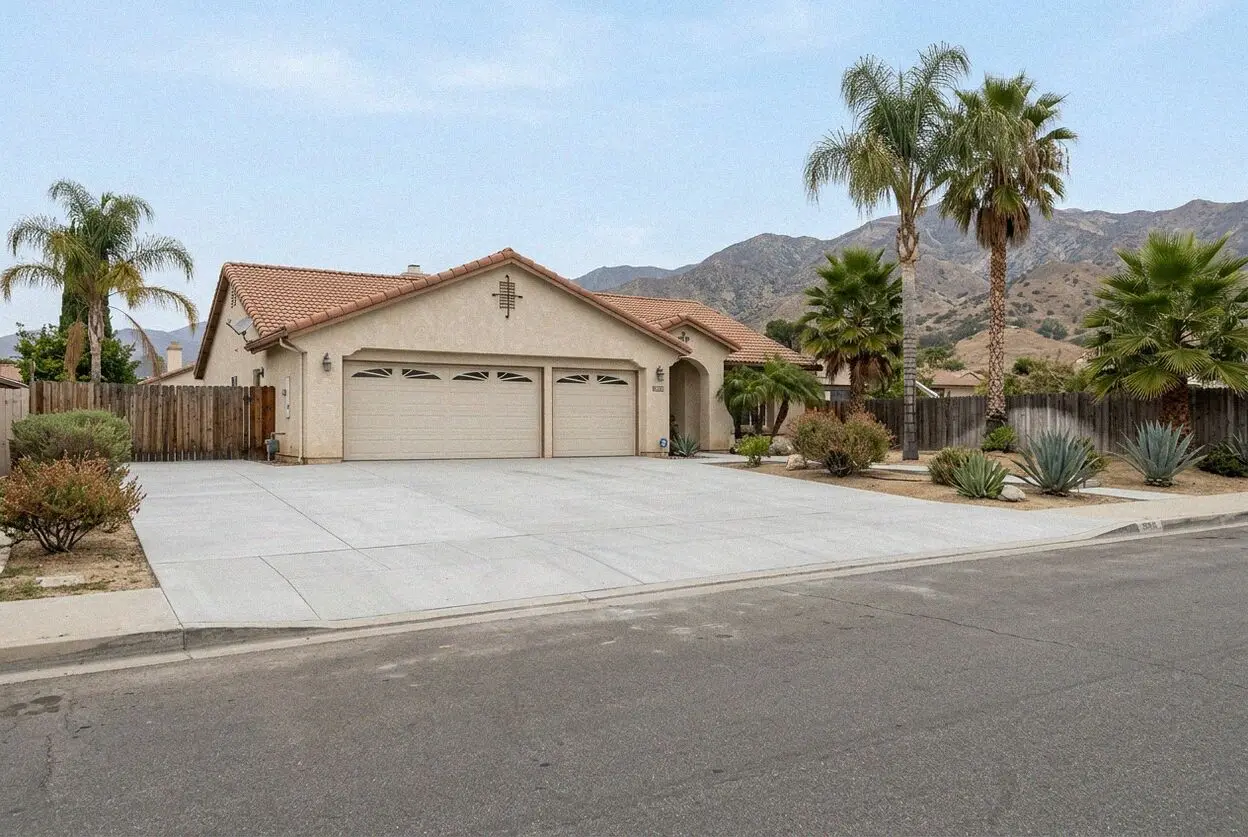
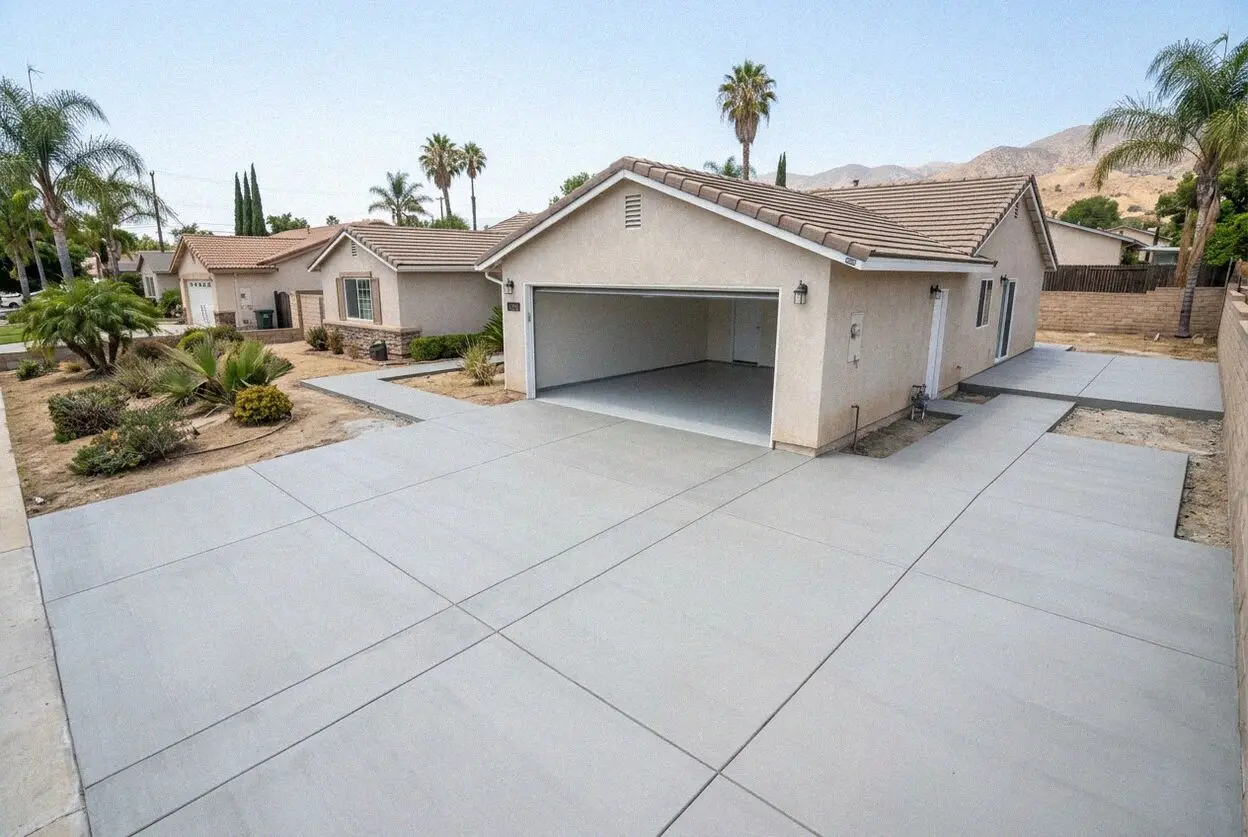
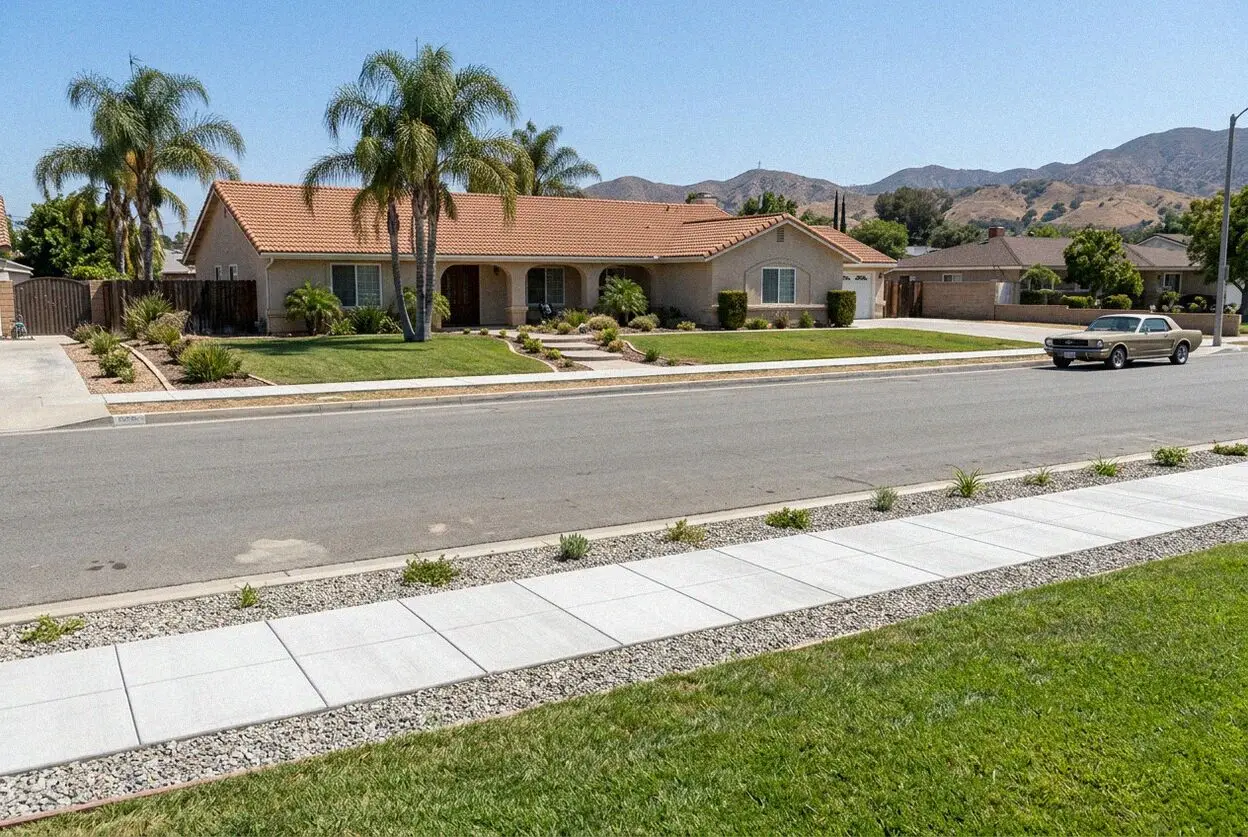
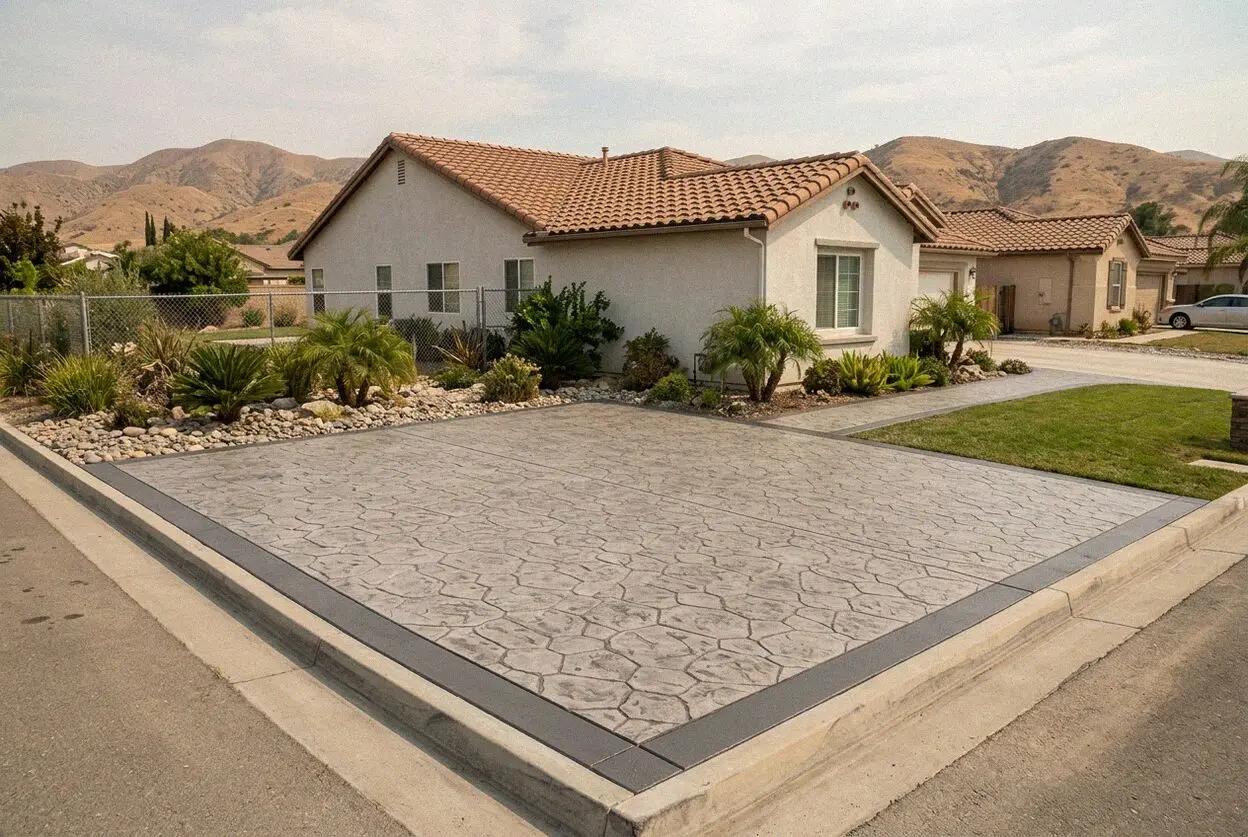
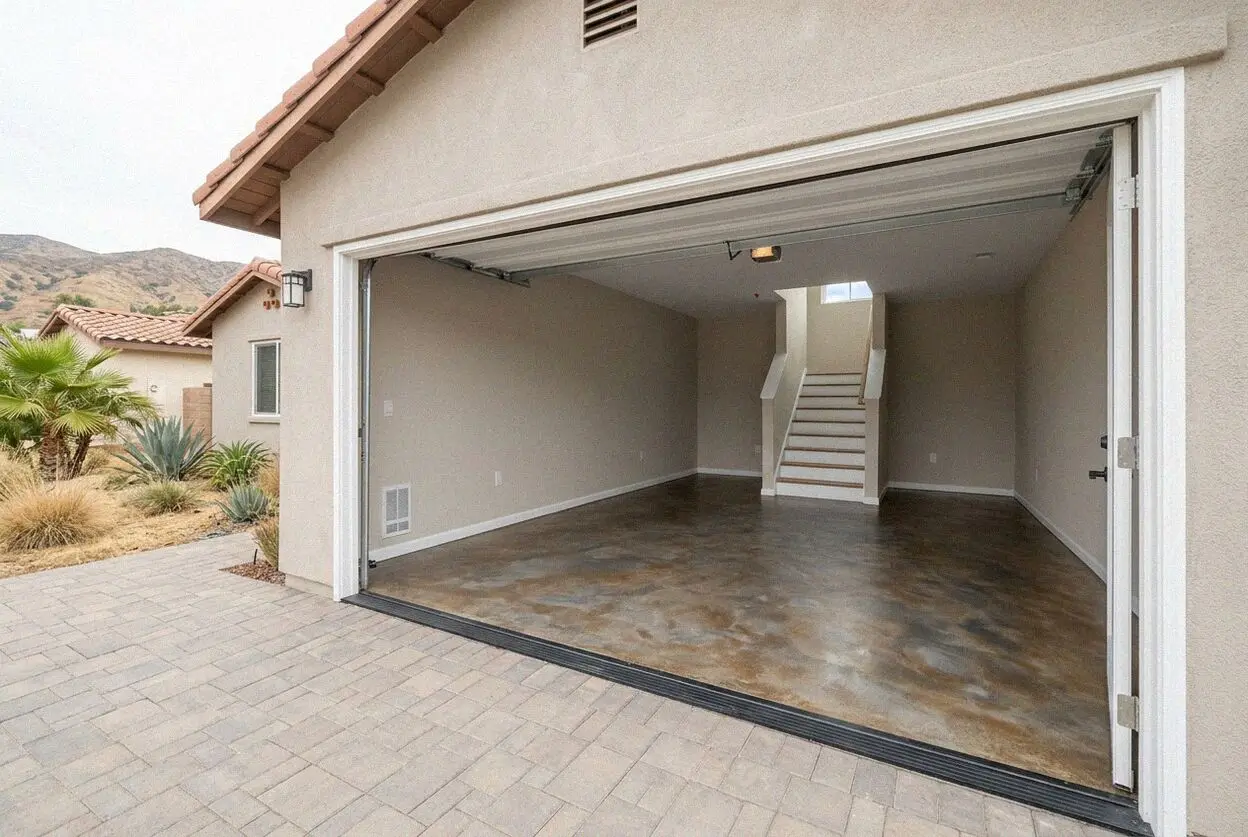
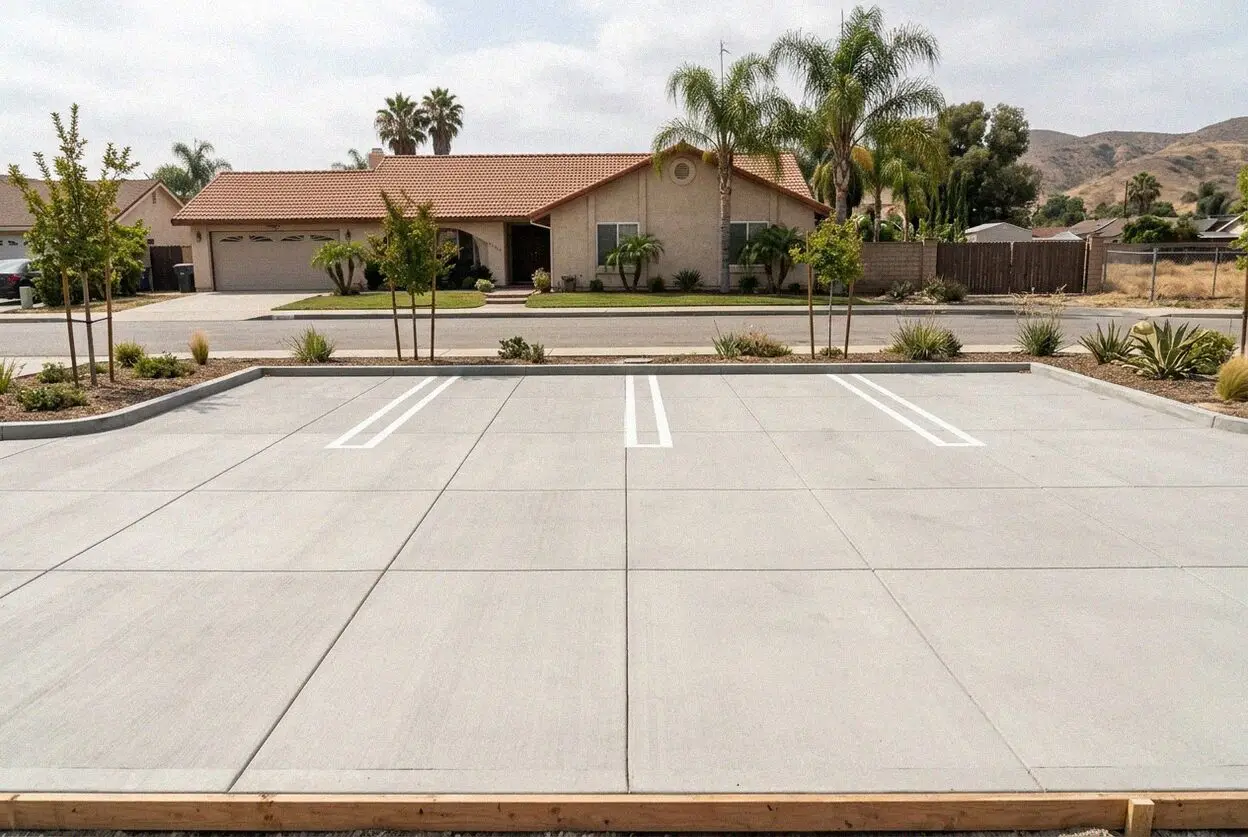

Ismael Duarte gave 21 years to other outfits before he put his own name on a license in 2015, drives through the streets off Garvey, shop floors along Valley Boulevard, and one length of public walk after another on the older blocks. He grew up here, he still lives here, and he writes every estimate and stands on every pour himself.
The Ground Under El Monte
Two rivers either side, a floor made of what they carried down, an old grid that has been dug up a hundred times over, and a five-year rule about cutting the street. It all reaches the estimate.
El Monte was incorporated on 18 November 1912, decades ahead of the towns that now ring it, South El Monte in 1958, Rosemead in 1959, Temple City in 1960, so the core grid was surveyed long before any of theirs. Then it filled: 13,163 residents in 1960 and 69,892 ten years on, walnut ground cut into small lots and built out at speed. Almost everything we break out was laid in that rush.
Underneath is San Gabriel River alluvium, sand and rounded gravel spread flat across the valley floor. The Rio Hondo runs down the west side of the city and the San Gabriel River down the east, and the two are tied together at the Whittier Narrows dam a few miles south. It drains better than almost anything a slab is laid on and takes compaction well, but it holds no cut face at all, so a footing trench is dug and filled the same day. The USDA Web Soil Survey will show you your own lot.
A building permit comes from Building & Safety at City Hall West on Valley Boulevard, where the counter runs Monday to Thursday and shuts on Fridays along with the rest of the building. Work beyond your property line goes to Public Works instead, on an encroachment permit. The city also holds a five-year moratorium on cutting any street it has rebuilt or slurry sealed, which we check before promising a date for an apron.
Drives here are short, flat and tight up against a neighbor, so the decision turns on edges and on repairs. A slab keeps a straight line along a fence and can be sawn out panel by panel; the other two spread or wander once sand shifts beneath them.
| Option | Lifespan | Usable again | Upkeep | On river sand, on a tight lot |
|---|---|---|---|---|
| Poured concrete | 30-40 years | Foot at 24-48 hrs, cars at 7 days | Reseal every 2-3 years | Rigid over sand, and sawn out panel by panel to repair |
| Asphalt paving | 15-20 years | Drive on it after 2-3 days | Sealcoat every 2-3 years | Spreads sideways at an unedged frontage and holds oil |
| Interlocking pavers | 25-50 years over a built base | Walk on them straight away | Sand back the joints yearly | Bedded in sand, so it dips wherever water gets under |
Laying asphalt costs the least and keeping it costs the most; with pavers it runs the other way about. On a narrow frontage the slab holds its edge.
Because clean sand drains as fast as anything in the basin but will not stand where it has been cut. The floor here is San Gabriel River wash to depth, so forms go in tight, the sand is wetted before it is rolled, and a trench left open overnight is half full by morning.
Weak lines you cannot see from above. The grid around Valley Boulevard has been dug open for water, gas and sewer since before the city was a city, and each backfill settled at its own rate. We probe across the pad and lift that material out rather than let concrete bridge it.
It changes the hours far more than the materials. Frontages are narrow and side yards are often under three feet, so a truck cannot always reach the back and the load moves by barrow or by pump. That gets settled at the measure and shown as its own figure, never sprung on you later.
The joints choose it. Concrete shrinks while it sets and has to part somewhere, so grooves go in every 8 to 12 feet on a four-inch slab and the crack follows them rather than wandering across the middle. Over ground that has been trenched, we bring that spacing in tighter still.
Inside your boundary a drive or walk is usually not permitted work under the state code. That list names only those two, so a patio slab still goes to the counter. Cross to the apron, curb or parkway and Public Works wants an encroachment permit. Retaining over 4 feet takes its own.
Load sets it, not the soil. People and cars only, and it goes down at 4 inches; stand a work truck, a boat trailer or a jacked-up car on it and that becomes 5 or 6. Depth is the one line nothing can put right later on, so the figure is written there before you sign anything.
Cost, base, depth, joints, permits, sealing and what the guarantee covers, all answered for river sand and the small lots that were built on it.
Nobody can give you one down the phone, and depth is the reason. Going from four inches to five is a quarter more concrete plus the extra base under it, before anyone has talked about a finish. Then it is how much old slab has to be broken out and hauled away, and how far a barrow travels to reach the pour. All of that is measured free and set down in writing.
Square footage, the depth poured, and what is under the old one. A 1960s frontage laid straight onto river sand with no base at all is a different dig from one where a service trench crosses the middle, and that difference lands on the demolition and base lines rather than the concrete.
Three things set it: the area, how the concrete gets to the back, and what finish goes on a four-inch slab over rolled base. Access is what really moves the figure in El Monte, because a gate a buggy fits through is a morning, and a yard you can only reach through the house is a day of barrow runs. A stamp or a color adds a day at the end for the seal.
Four inches under cars, five to six under anything heavier, a work truck, a loaded trailer, a motorhome stood over the winter. Rolled sand carries weight well, but it cannot rescue a slab poured thin: that one starts breaking up under everyday use within a handful of years and no repair puts the missing inch back. Your depth is on the estimate.
Yes, because a slab can only hold what sits under it and most failures begin below the concrete. Rolled base spreads the load and lets water leave. Sand does that well on its own, but only where it has been compacted damp and where nobody left a soft trench running through it.
They are what keeps a crack in a straight line. Concrete shrinks as it cures and something has to give, so grooves are sawn the same day the slab goes down and the movement collects in them. On a lot where old backfill runs under the pad we put them closer together than the tables ask for.
The native ground rarely does. This is deep river sand and rounded gravel, uniform and free draining, with none of the swelling clay that lifts slabs elsewhere in the county. What breaks concrete here is what people have buried in that ground since 1912: pipe trenches, old fill and the rubble of whatever stood on the lot before.
October to April is easiest, though this is a mild corner of the county and nothing shuts the work down. Afternoons here sit in the high 80s at the peak of August, cooler than the valley towns further inland, so summer pours only need an early start and the surface kept wet for its full seven-day cure.
Yes, and a drive gets it sooner than a back patio does. Bare concrete is porous, so the first oil drip off a parked car sinks in and stays; and color or stamp work loses its depth in the sun without a coat over it. Reseal every 2 to 3 years, and more often where a car stands in the same spot.
Three to five days of crew time on an ordinary house job, and the concrete carries on curing after we have gone. On the older streets the breaking out and the digging take the first couple of days, and that is the part that moves. You are back on it on foot after a day or two, parking after a week, and putting real weight on it at 28 days.
A drive or a walk inside your own boundary, not usually, but the state code names those two and nothing else, so a patio slab is not on the list and goes to the counter to be asked about rather than assumed. Anything past that line is right-of-way and carries its own application through Public Works. The apron in front of your garage is the piece people take for theirs and is not.
You ring the number you already have and we come back out. Every job carries a written workmanship guarantee against defects in how it was built, and its terms sit on the estimate you signed, base, depth, joints and finish. Marks, everyday wear, and soil shifting by more than the joint layout was drawn for fall outside it, and that is spelled out on the same sheet.
Where We Work
The van goes out from Peck Road to 20 towns across Los Angeles County, most of them inside the San Gabriel Valley. Pick yours off the list, or ring and we will tell you in a sentence whether we come to you.
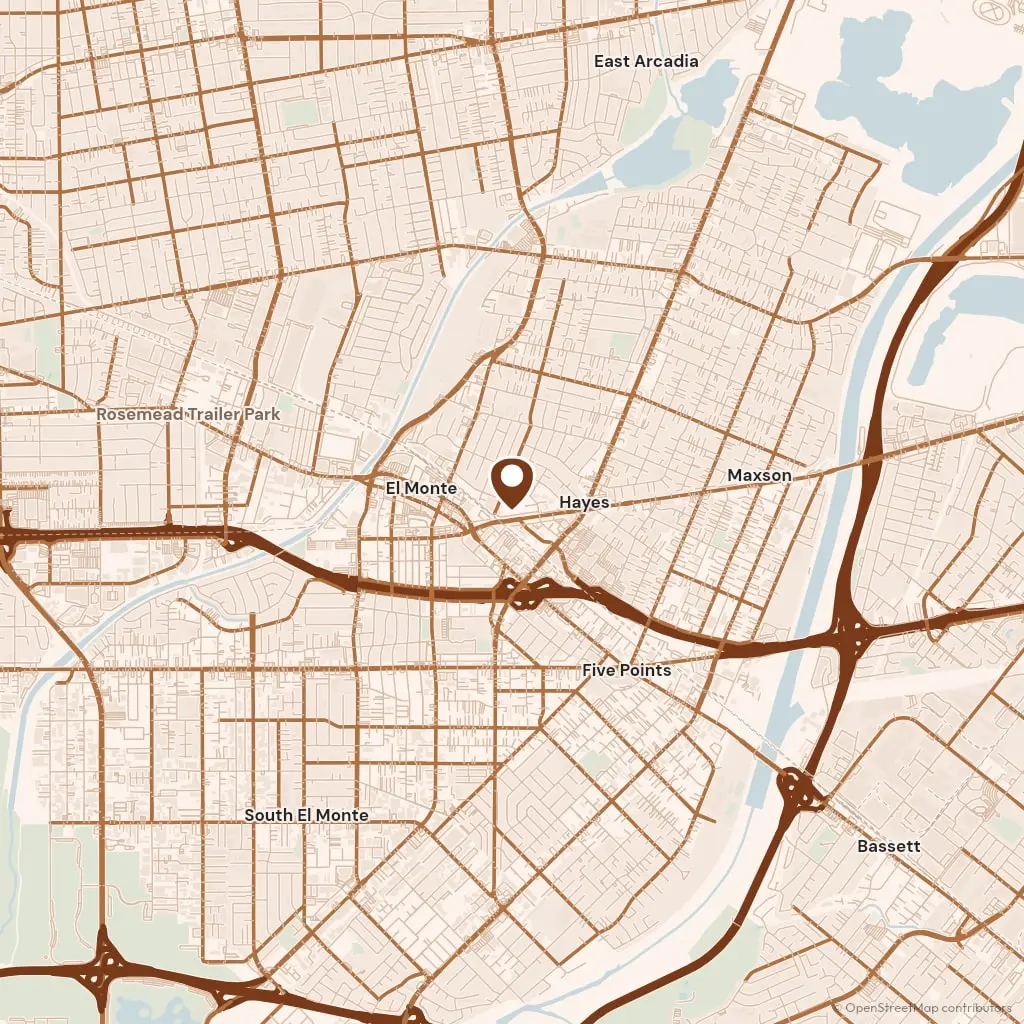 Open the El Monte Office in Google Maps
 Ring, or leave the form, and you hear back within 1 business day. Ismael Duarte does the visit himself: he measures, opens the ground where he has to, and hands you the figure before he goes. Nothing is priced off a photograph.